In modern construction, cutting and bending of reinforcement steel is a critical component whereby contractors pre-prepare the required lengths and shapes for placing bars at the site. Rather than wasting time measuring, cutting and bending steel on-site, construction teams can be delivered precisely prepared reinforcement ready for immediate installation.
This can increase the organisation of projects, decrease material waste, and be beneficial for safer workplace conditions. Whether it is residential developments or huge infrastructure works, well-prepared reinforcement steel will complement smoother construction and improved efficiency.
Quick Summary
- Cut and bend reinforcement to the dimensions and details required by project drawings and specifications.
- Factory machining can improve dimensional accuracy and uniformity.
- Pre-assembled steel can reduce site labour, equipment, and handling requirements.
- Accurate cutting reduces offcuts and waste of unnecessary steel.
- Quality, reliability, and timely delivery demand an experienced supplier.
Why is reinforcement steel cut and bent before construction?
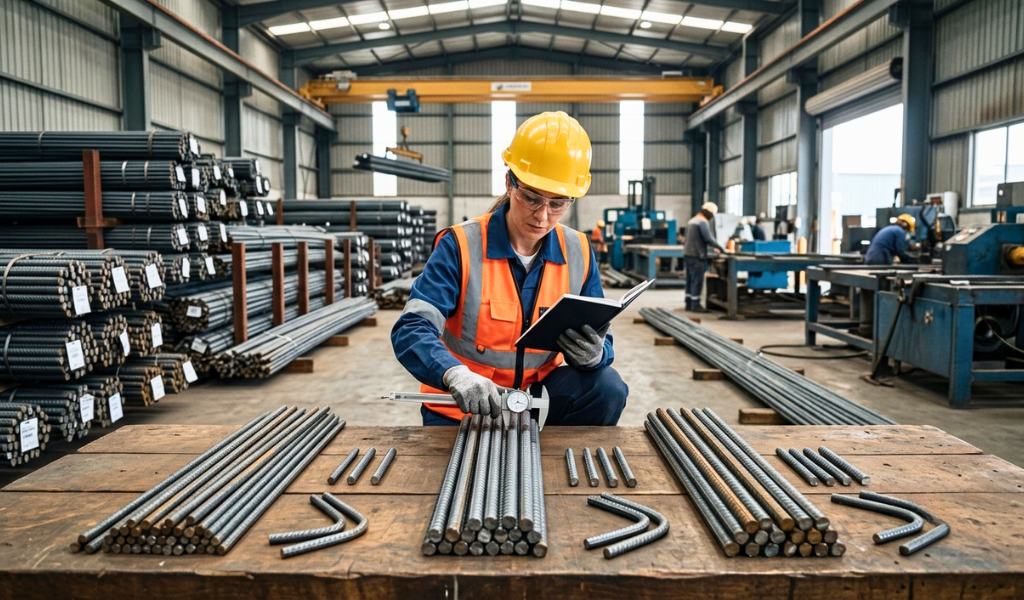
Reinforcement bars must conform to certain structural designs. Depending on where they are destined to be fitted, other lengths, angles, hooks, or shapes can also be obtained.
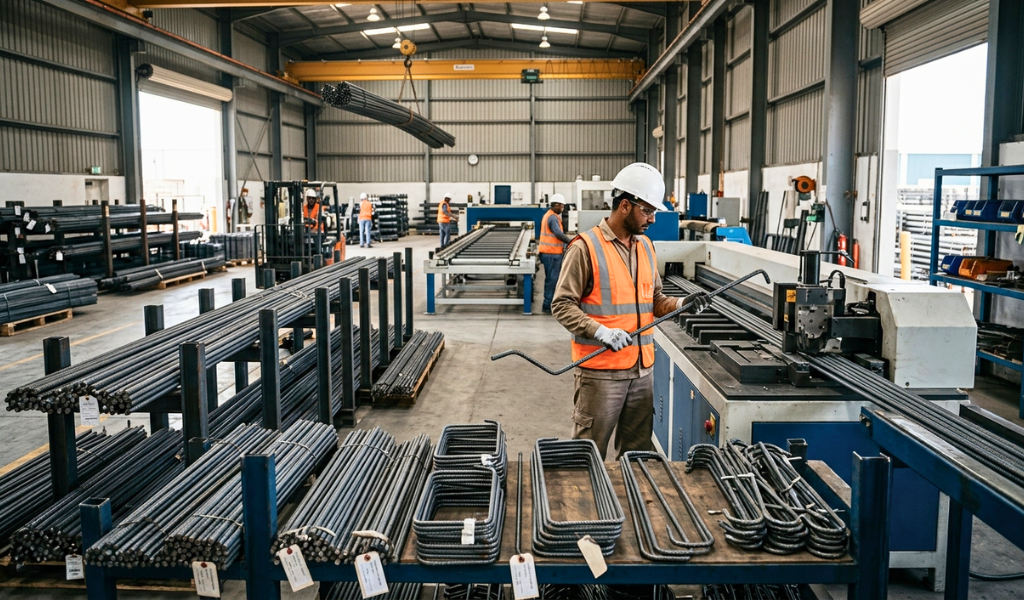
These needs can be accomplished in a regulated processing environment by cutting and bending steel prior to distribution. This empowers workers to focus on placing and securing rebar, rather than spending hours prepping steel at the job site.
Various professional companies also offer steel cutting services with detailed bar schedules and construction drawings, ensuring that required quantities are properly cut to specification.
Better preparation, smoother installation
Additionally, when reinforcement reaches the site ready to be used on a project and can therefore also allow teams within sites to arrange all materials based according to the construction phases. This may help minimize delays that arise as a result of measuring or manipulating discrete bars throughout assembly.
What are the benefits of cut-and-bend rebar?
For those projects that require large volumes of reinforcement, there are multiple practical benefits to using cut-and-bend rebar services.
Improved accuracy
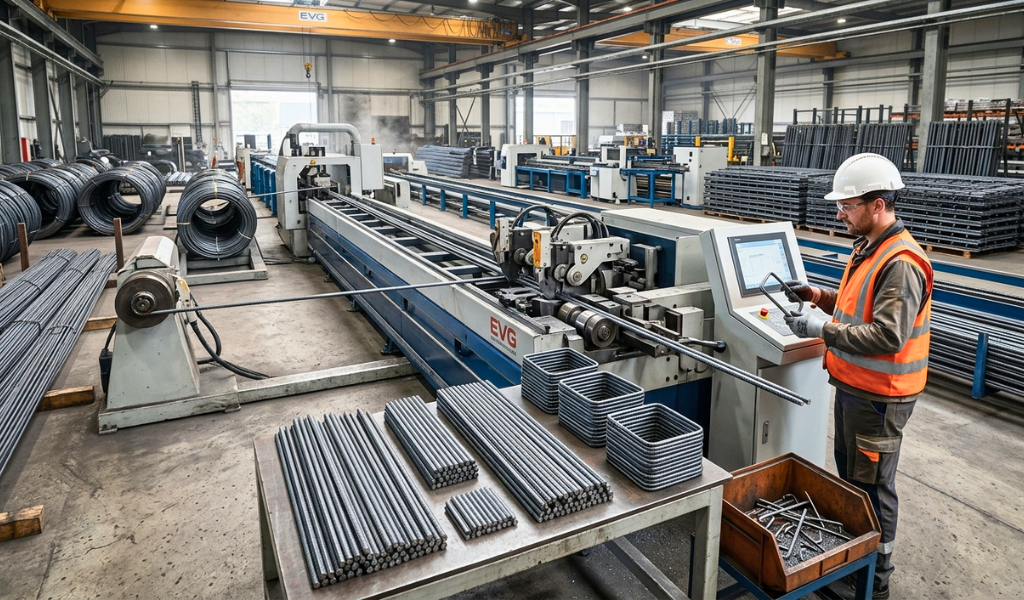
In factory-based processing, engineering-independent construction machinery and established processes are used for similar dimensions and bends. This reinforcement at the correct point can make a great impact as it helps in alleviating errors while installing.
Faster site work
Less cutting and bending shall have to happen on-site, as it is ready-to-Install reinforcement. This assists teams in expediting reinforcement efforts.
Reduced labour requirements
This allows construction workers to focus more on installation and other logistics rather than preparing the manufactured building, as a lot of the work is done prior to delivery.
Safer working conditions
Mitigating on-site processing of steel can also reduce unnecessary lifting and the use of cutting equipment in busy construction areas.
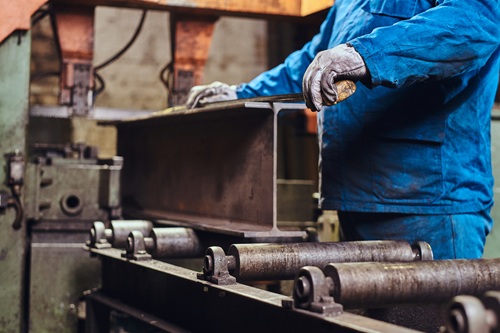
Is factory-cut and bent rebar better than on-site steel processing?
There are considerable advantages to processing the factory rather than doing all the reinforcement preparation on site for many construction projects.
When projects require large amounts of reinforcement or complex bar shapes, steel rebar bending services performed in a controlled facility can provide greater consistency.
|
Factor |
Factory-Processed Rebar |
On-Site Processing |
|
Accuracy |
Controlled, repeatable processing |
Depends on site conditions and equipment |
|
Site labour |
Lower preparation workload |
More labour required |
|
Waste control |
Planned cutting can reduce offcuts |
Greater potential for excess material |
|
Installation |
Ready for planned placement |
Preparation may be required first |
|
Site organisation |
Easier material scheduling |
More equipment and material handling |
|
Productivity |
Supports faster reinforcement work |
Can take additional time |
However, the right option depends on project requirements, quantities, drawings, available space, and programme constraints
How does reinforcement steel cutting and bending reduce construction waste?
This can lead to extra costs in the project and unnecessary disposal requirements for material waste. Accurate cutting makes it possible to manufacture reinforcement to defined dimensions and not by taking rough measurements on the construction site.
This pre-cut and pre-bent reinforcement steel can help contractors handle the material more efficiently. A well-thought-out cutting schedule can optimise bar lengths and cut down on unnecessary offcuts.
That does not mean that waste can be abolished altogether. Material surplus can still be generated due to design changes, wrong quantities, or installation errors. Still, careful planning and communication between the contractor and supplier are important.
How does cutting and bending rebar improve construction efficiency?
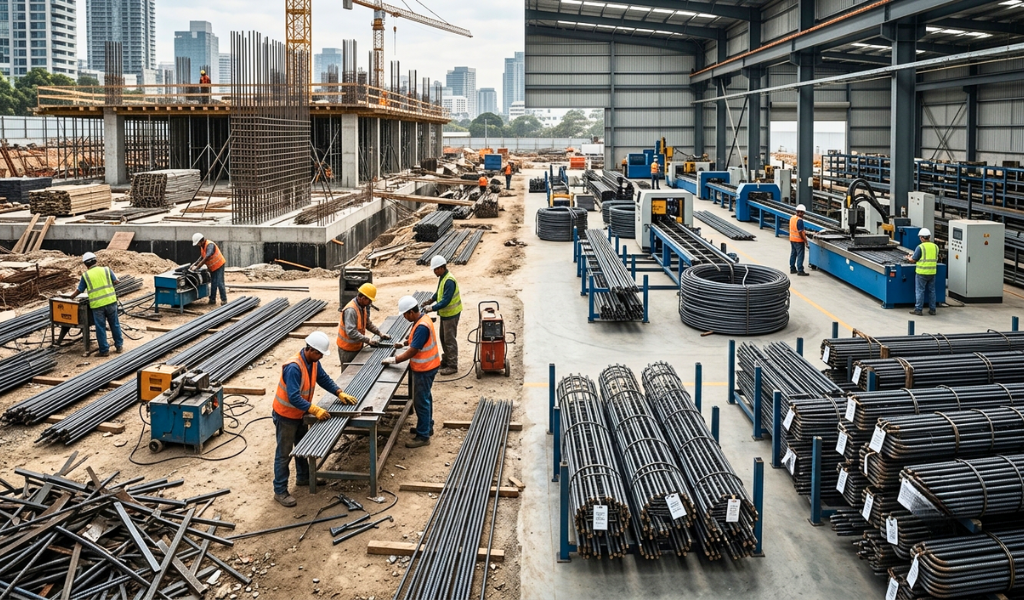
The biggest plus is that it moves preparation away from the construction site. Reinforcement prepared for particular requirements can be provided to contractors in lieu of establishing cutting and bending processes for each phase of the project.
Key efficiency improvements
Less on-site processing: Teams can focus on installation, not prepping each bar.
Better workflow: Sequence delivery of prepared reinforcement organised to suit construction requirements.
Less handling: Fewer processing activities mean less movement of heavy steel around the site.
Repeatable production: Systematic production of bars of specific shapes and sizes.
This can be especially useful for projects requiring custom rebar cutting and bending in case the reinforcement has complex shapes or project-specific dimensions.
What should I look for in a reinforcement steel cutting and bending supplier?
The choice of the right supplier is as important as the processing method. Look for a company with the right equipment, experienced personnel, and the ability to work accurately from project drawings and bar schedules.
Consider the following:
- Processing accuracy: Ensure the supplier has the capacity to meet the specified dimensions and bending specifications.
- Production capacity: Make sure it can handle the volume and schedule of your project.
- Quality control: Enquire about inspection and testing procedures.
- Delivery planning: Deliveries need to be reliable and organised to avoid costly delays on site.
- Technical capability: Complex or bespoke reinforcement may require specialist processing.
- Clear coordination in project communication helps to reduce errors due to changes or missing information.
Talai Al-Folath For Manufacturing Company is a dependable provider that can support construction teams by providing professionally prepared reinforcement according to the project specifications.
Conclusion
Cutting and bending reinforcement steel can help construction projects improve productivity, accuracy, and material efficiency. By preparing the reinforcement in advance of delivery to the site, contractors can reduce the amount of processing on site, avoid unnecessary waste, and better organise their installation processes.
Whether you require standard preparation or custom rebar cutting and bending, selecting a capable supplier and providing accurate project information are key to getting the best results. If your project requires reliable cut and bent reinforcement, it is worth talking to a specialist supplier about your drawings, quantities, and delivery requirements.
FAQ's
1. What is reinforcement steel cutting and bending?
It is the process of cutting reinforcement bars to specified lengths and bending them into required shapes before they are delivered for construction.
2. Is cut and bent rebar suitable for large construction projects?
Yes. Cut and bent rebar can be especially useful for large projects because it can reduce on-site preparation and support more organised reinforcement installation.
3. Do cutting and bending rebar reduce steel waste?
It can. Accurate cutting based on project requirements and planned bar schedules can reduce unnecessary offcuts and improve material utilisation.
4. What is the difference between cut-and-bend rebar and standard reinforcement steel?
Standard reinforcement steel may require cutting and bending before installation, whereas cut and bent rebar is supplied already prepared according to specified project requirements.
5. How do I choose the right reinforcement steel cutting and bending supplier?
Check the supplier's processing accuracy, quality controls, production capacity, technical capabilities, delivery reliability, and ability to meet your project's drawings and specifications.