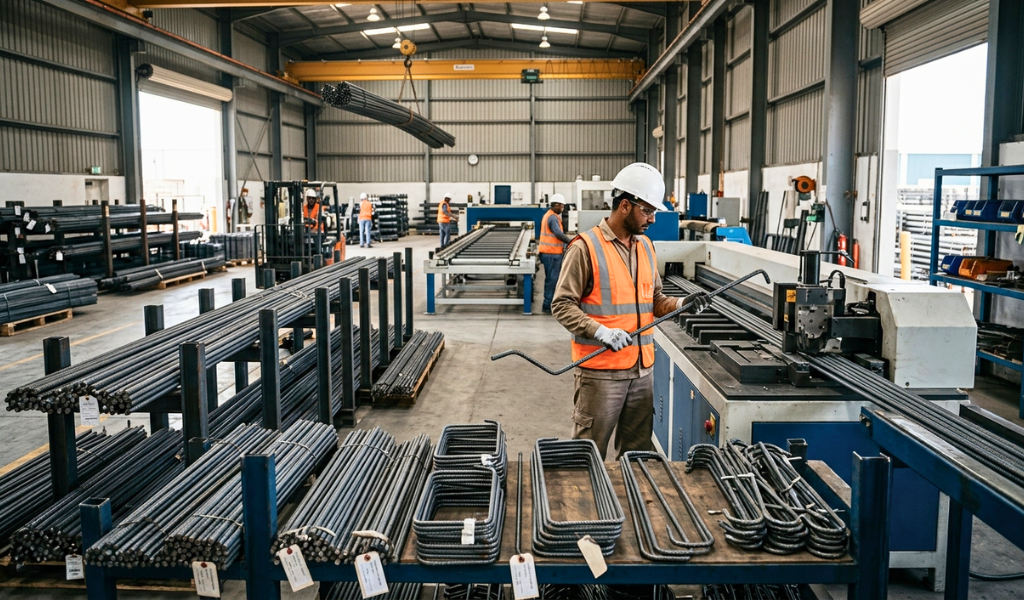
Reinforcing steel is used to add strength and stability to concrete structures in construction projects. But wrong measurements, some manual errors & inefficient manufacturing can result in recurring wastage of material. Rebar has a specific machine to cut and bend reliably in accordance with programmed processes and project orders, enabling contractors to get the most out of their steel.
Automated fabrication means accurately prepared reinforcement ready for installation instead of cutting and shaping bars manually at the construction site. It helps to generate fewer offcuts, enhance consistency, and ease material planning.
Quick Summary
- This eventually allows automated cutting of rebar to exact project measurements.
- Reducing defects and reinforcement rejection through precise bending
- It can also help to reduce onsite steel handling and further unnecessary offcuts through factory-based production.
- Improved material utilisation can be part of a more cost-effective construction process.
- When you select a manufacturer with a known experience, you are assured of quality and reliability.
How Does Precise Rebar Cutting Prevent Unnecessary Steel Loss?
When preparing reinforcement steel for a construction project, every millimetre counts. If the bars are too short, they should be replaced. If they are now cut too long, that extra steel turns into a wasteful offcut.
Automated equipment operates per pre-established metrics and cutting calendars. That way, bars can be consistently sized to the necessary dimensions.
Using a professional rebar cutting service can also support better planning when it comes to materials. Rebar cutting waste reduction can be achieved by cutting patterns operations are pre-planned for effective use of available steel.
Why does precision matter?
Accurate cutting helps reduce:
- Excessive offcuts
- Incorrect bar lengths
- Rework caused by fabrication mistakes
- Replacement material
- Unnecessary handling and processing
What are the benefits of rebar cutting and bending?
Controlled fabrication is the main advantage of this. The automated service for rebar bending can manufacture the same shape and angles because of approved drawings and specifications.
The other benefits are better dimensional accuracy, easier installation with less rework, and better project organization.
For extensive projects, reinforcement steel cutting and dipping can likewise assist with preparing huge volumes of reinforcement in a systematic way, without depending too heavily on exposition structure on site.

Does cutting and bending rebar save construction costs?
The answer is yes, and here is how cutting rebar and bending it can save you money.
Firstly, less steel may be wasted in the fabrication process with better material utilization. Secondly, if reinforcements are well prepared, it will help curb the cost of rework. The third is that factory fabrication cuts down on the cutting, bending, and related site labor.
The total savings involve project size, reinforcement requirements, labour, logistics, and steel prices. Although eliminating waste and enhancing productivity can be compared, it directly makes a quantitative difference to project efficiency.
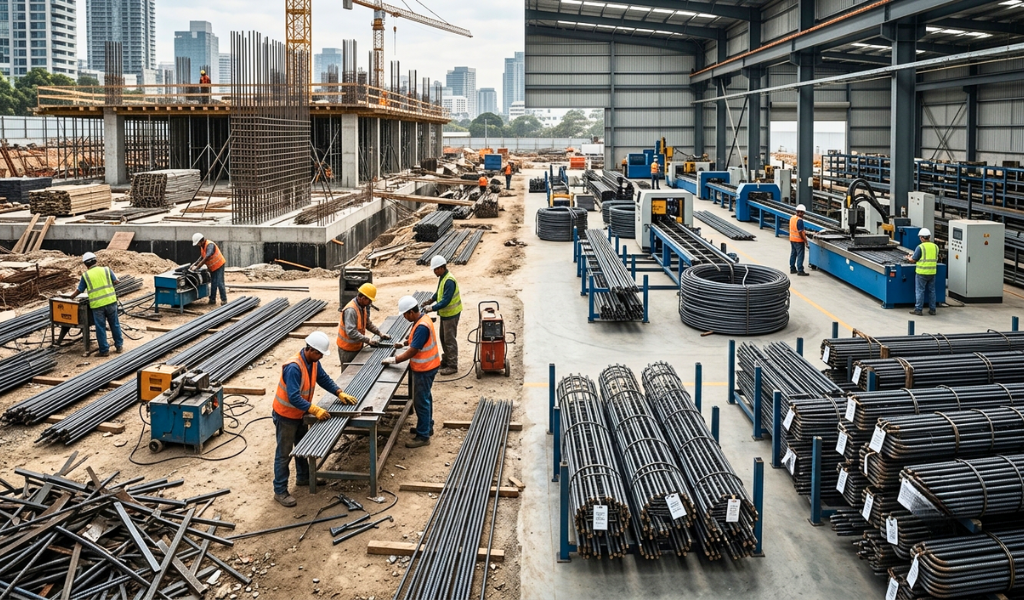
Why is factory-cut and bent rebar better than cutting it on site?
Site fabrication may include a constrained working area, manual sizing, and extra handling. It could also create even more travel disruption around active construction sites.
Factory-cut and bent reinforcement is processed in a controlled setting using special equipment. Bars can come ready to be placed for their intended structural purpose, thus making installation more systematic.
This strategy is especially beneficial for projects with significant reinforcement volumes or more complicated bending needs.
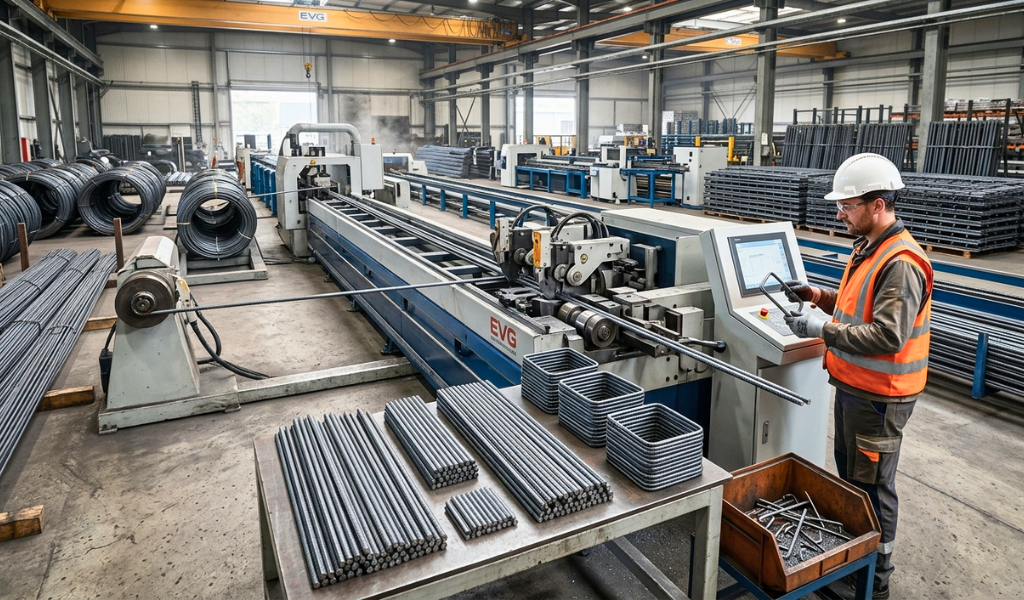
How does automated rebar cutting improve accuracy?
As opposed to regular cutting systems, where the person relies more on measuring manually, automated cutting systems would follow programmed dimensions assigned to them instead. When the specifications needed are keyed into the machine and checked, the device will continue making bars at the exact lengths.
Such repeatability is useful when hundreds or a thousand of the reinforcements is the requirement. Making it systematic in regulations enables fewer differences between batches, and it promotes better installation.
Accuracy from fabrication to installation
A well-managed process typically involves:
- Scrutinising the drawings for reinforcement and bar schedules.
- Confirming required dimensions and quantities.
- Programming cutting and bending equipment.
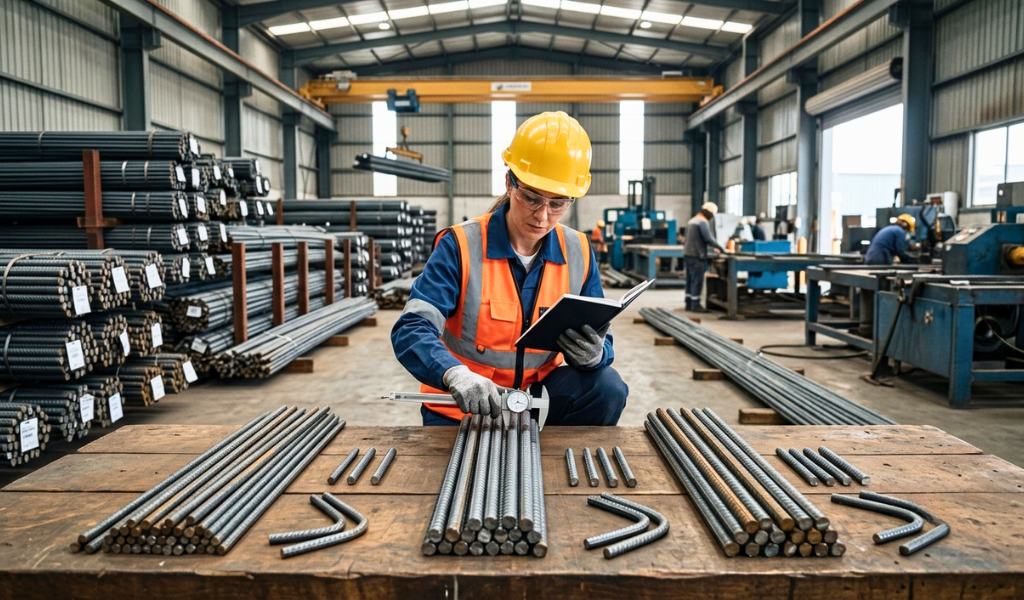
- Checking fabricated bars against specifications.
- Hosting and executing installation reinforcement.
What should I look for when choosing a rebar cutting and bending service?
Seek a provider with appropriate automated equipment, a skilled workforce, and robust quality-control processes. And you also need to check if the supplier can fulfill your required volumes, bar sizes, and bending specs.
Which includes questions about accuracy of fabrication, production capacity, scheduling, quality testing, and delivery arrangements. Avoiding communication is another cause of errors, and that can be avoided when the contractor is clearly in communication with the engineer and the fabricator.
Trustworthy experts like Talai Al-Folath For Manufacturing Company are prepared to satisfy the Outreach organizations that necessitate made fortification steel.
Practical Information Table
|
Requirement |
Manual Site Fabrication |
Automated Factory Fabrication |
|
Cutting accuracy |
Dependent on manual measurement |
Programmed and repeatable |
|
Material efficiency |
Can produce avoidable offcuts |
Better cutting control |
|
Bending consistency |
Can vary between workers |
Consistent machine-controlled bending |
|
On-site labour |
Generally higher |
Reduced fabrication workload |
|
Site organisation |
More cutting and handling required |
Reinforcement arrives prepared |
|
Waste management |
More difficult to control |
Easier to plan and monitor |
|
Large-volume production |
Labour-intensive |
Well suited to repetitive requirements |
Making Rebar Fabrication More Efficient
It is not only about wasting less material to create steel. It is about intelligent preparation for the entire fabrication process.
Correct bar schedules, cutting patterns, and automation on the shop floor, along with efficient quality control, can combine to increase material utilisation. For projects that involve high quantities or complicated reinforcement shapes, early coordination of fabrication requirements with contractors is also critical.
Combining precise rebar cutting and bending with proper planning helps to eliminate unnecessary waste and also gain higher productivity.
Conclusion
The automated rebar cutting and bending provides a resourceful solution to enhance the accuracy of reinforcement fabrication and eliminate waste of steel. Factory-controlled production can reduce offcuts and rework whilst permitting precise cutting and accurately bent components, facilitating a more efficient construction process.
The right rebar cutting and bending service will help contractors work with the utmost efficiency, making the most of design materials and managing reinforcement preparation in a high-quality manner. Examining equipment, quality controls, and production capabilities prior to selecting a supplier will help confirm that the reinforcement produced meets project needs.
FAQ's
1. How does automated rebar cutting reduce material waste?
Automated cutting uses programmed dimensions to produce reinforcement bars accurately, reducing excessive offcuts, incorrect cuts, and replacement material.
2. Is cut-and-bend rebar cheaper than preparing rebar on site?
It can reduce overall costs by lowering material waste, rework, and on-site fabrication labour, although savings depend on the individual project.
3. What is the difference between rebar cutting and bending?
Rebar cutting involves producing bars to specified lengths, while bending shapes those bars into the required angles and configurations for structural applications.
4. Why use factory-cut and bent reinforcement steel?
Factory fabrication provides controlled production, consistent dimensions, and less on-site cutting and bending, which can improve construction efficiency.
5. How can I choose the right rebar cutting and bending supplier?
Consider the supplier's equipment, fabrication capacity, quality-control processes, experience, accuracy, delivery capabilities, and ability to follow project specifications.