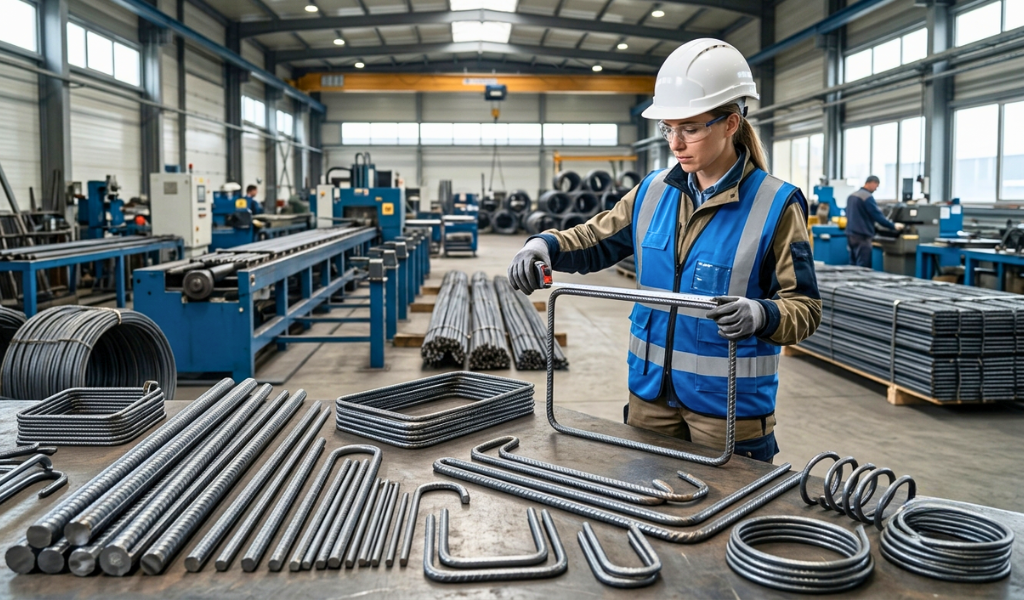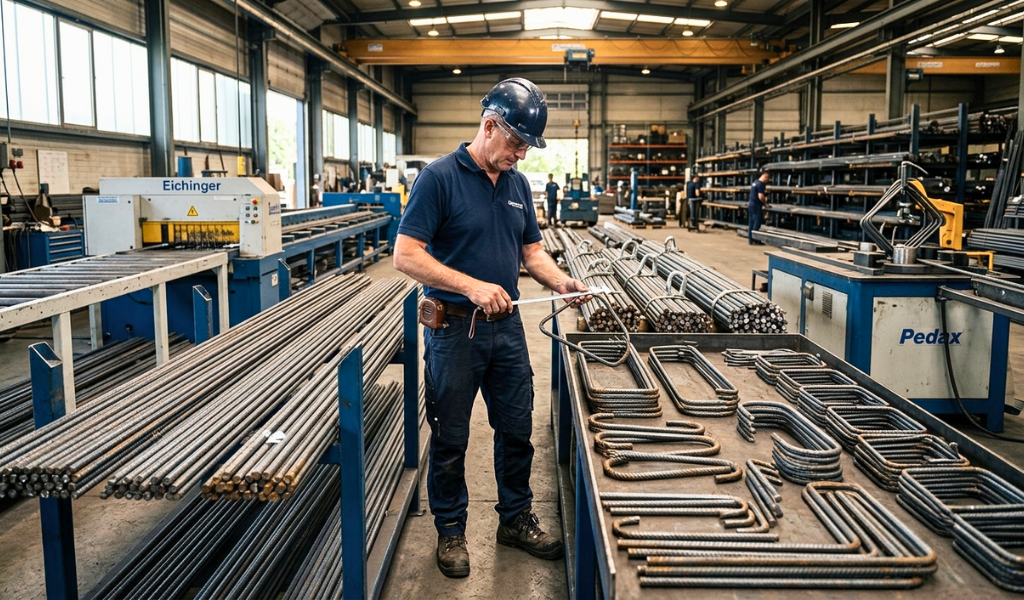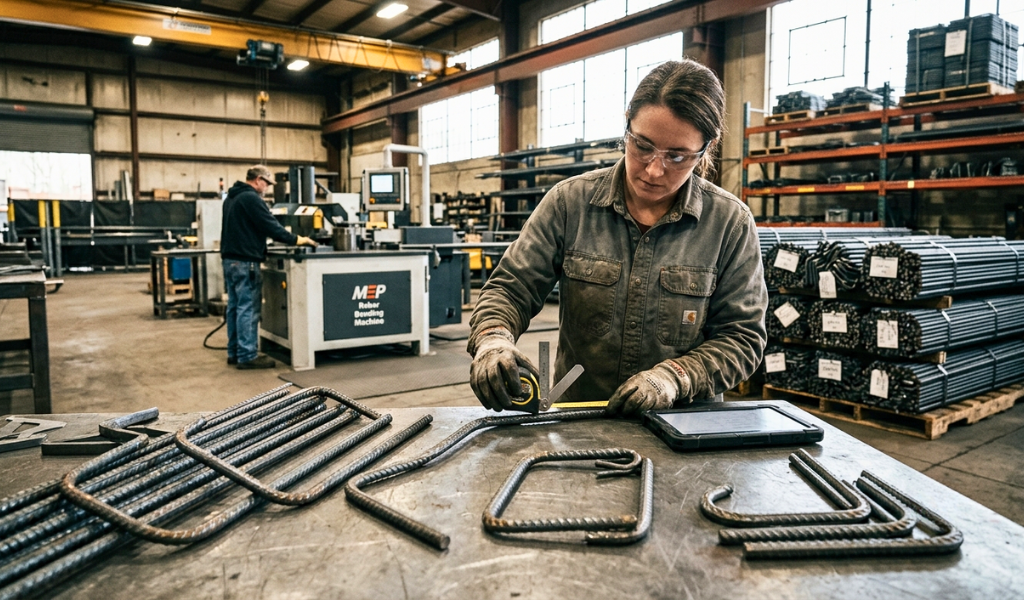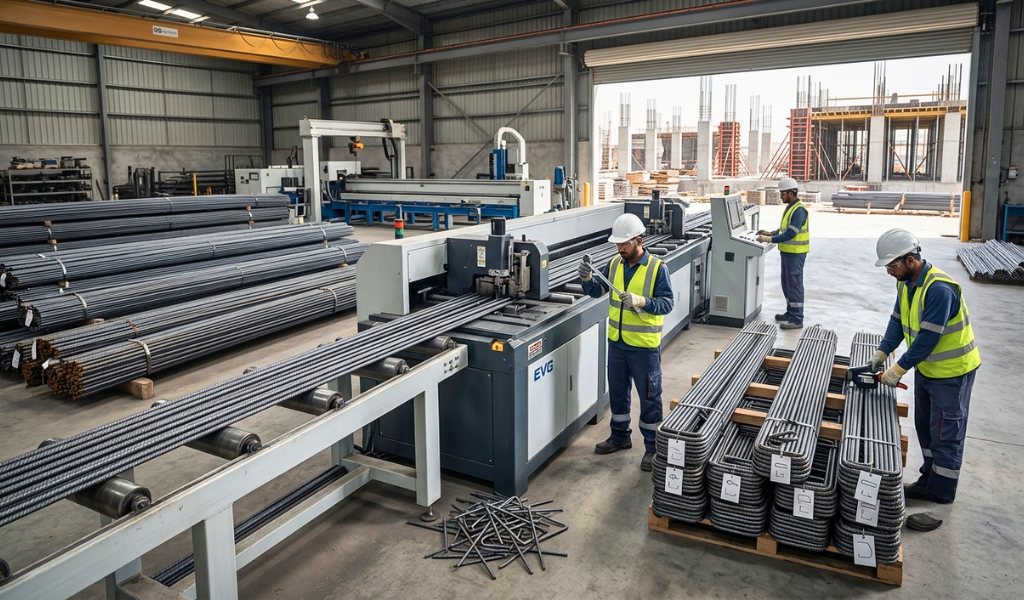
Construction relies on precise reinforcement to deliver strength, stability and durability over time. But cutting and bending rebar on-site generated material waste, required more man-hours, and decelerated installation. Rebar cutting and bending allows you a better-handled option in that the reinforcement steel is cut down and bent specifically to project plans before it arrives to your site.
By accurately sourcing and scheduling, contractors can maximise material use, streamline assembly and minimise unnecessary work carried out on site. This renders prefabricated reinforcement more adoptable across residential, commercial and infrastructure projects.
Quick Summary
- Cut and bend rebar is produced to specific lengths, shapes and quantities.
- Cutting waste on construction sites can be reduced by controlling fabrication at the factory.
- Using pre-formed reinforcement assists in reducing manual bending and the related labour.
- Preparing the bars correctly should assist with more timely & orderly installation.
- Selecting a trusted partner means that you can be assured of consistency, quality and efficiency across projects.
How Does Cut and Bend Rebar Reduce Construction Waste?
Conventional reinforcement also typically causes the need for cutting long bars on-site to achieve required lengths. Wasting materials due to incorrect measurements, offcuts, and fabrication mistakes.
Reinforcement is produced from cut and bent rebar as per the approved drawings and bar schedules. Bars can be cut into specified lengths and bent into shapes.
Such a method helps contractors plan for material quantities more accurately. This also minimizes the requirement to discard excess steel for on-site fabrication.
Better material planning
A professional reinforcement steel fabricator transforms the project information into the necessary bars. In these cases, through appropriate co-ordination of quantities and dimensions, much of the purchased steel can be used by the contractors, and off-cuts are reduced.
Does Cut-and-Bend Rebar Reduce Labour Costs?
Yes, it helps you to minimize the on-site reinforcement preparation. That means workers don't have to spend as much time measuring, cutting, and manually bending each bar.
This can aid contractors in deploying their workforce on installation and other critical construction activities. Automating preparation may also help reduce reinforcement cycles on specific projects involving significant levels of steel.
Less site preparation
When you use rebar cutting and bending services, much of the work of preparation happens in a controlled fabrication environment. This reinforcement comes ready to be installed, so it helps to considerably minimize repetitive site fabrication.
What Are the Benefits of Cut and Bend Rebar?
The benefits extend beyond waste reduction and labour savings. Properly prepared reinforcement can support better project organisation and installation efficiency.
Key benefits include:
- More dimensional precision: Bars are designed to specific dimensions and shapes.
- Less waste of materials: Reducing nonsensical offcuts through precise cuts.
- Reduced on-site labour: Safer and simpler, with less cutting and bending done by hand.
- Reduced installation time: The reinforcement can help make the fix work easier.
- Better site organisation: Grouping and tagging reinforcement can help with handling.
- Mass production: When orders are larger, controlled production can ensure consistency throughout.
Why Should Contractors Use Cut and Bend Steel?
Using cut and bend steel can make the reinforcement work more predictable. Instead of operating the fabrication equipment, taking measurements, and performing cutting operations across a busy construction site, contractors can be supplied with reinforcement ready for its intended use.
Prefabricated rebar can also help with workflow when projects have tight schedules. A well-organised reinforcement reduces handling and allows installation crews to work more methodically.
Talai Al-Folath For Manufacturing Company provides solutions tailored for project requirements and fabrication specifications for those projects that require reliable reinforcement preparation.
Practical Information Table
|
Factor |
Site-Fabricated Rebar |
Cut and Bend Rebar |
|
Cutting |
Performed on site |
Completed before delivery |
|
Bending |
Manual or site-based machinery |
Factory-controlled fabrication |
|
Material waste |
Potential for more offcuts |
Better quantity and cutting control |
|
Labour requirement |
More preparation work |
Reduced preparation workload |
|
Installation |
Requires additional preparation |
Ready for planned installation |
|
Site organisation |
More equipment and loose material |
Prepared and organised reinforcement |
|
Quality consistency |
Depends on site processes |
Controlled fabrication process |
Choosing the Right Cut and Bend Rebar Supplier
The supplier you select can have an impact on the reinforcement quality and optimize the use of delivery and project time. Ensure that the supplier can start work from the detailed bar bending schedules and the engineering drawings and project specifications before raising an order.
Evaluate if the manufacturer also meets the special parameters of the works planned, such as fabrication accuracy, production capacity, quality-control procedures, coordination with delivery, and qualification in similar construction requirements.
It is also valuable as a reminder of how reinforcement will be defined and structured when implemented. Labelling each spec and systematic bundling can help site teams easily locate and install the right bars.
It is important that a vendor of cut and bent reinforcement steel must be capable of maintaining the specifications specified while achieving mutually agreed production and delivery requirements.
Conclusion
Cut and bend rebar is a viable means for contractors to enhance reinforcement preparation while managing resource wastage and labour. Providing precision-produced bars, ready to be built onto, ensures construction teams can minimize site cutting, simplify workflows & optimize material usage.
In projects where time is of the essence, accuracy is a priority, and organised reinforcement supply is crucial, partnering with a robust reinforcement fabrication supplier can be the key to a more efficient and effective construction process.
FAQ's
1. What is cut and bend rebar?
Cut and bend rebar is reinforcing steel that has been cut to specified lengths and shaped according to project drawings or bar bending schedules before being delivered to the construction site.
2. How does cut and bend rebar reduce waste?
It uses planned measurements and controlled fabrication to reduce unnecessary cutting, incorrect pieces, and excess steel offcuts generated during on-site preparation.
3. Can cut and bend rebar save labour costs?
Yes. Because much of the cutting and bending is completed before delivery, site workers can spend less time on reinforcement preparation and more time on installation.
4. Is prefabricated rebar suitable for large construction projects?
Yes. Prefabricated rebar can be particularly useful for projects requiring substantial quantities of consistently shaped and accurately prepared reinforcement.
5. What should I check when choosing a rebar fabrication supplier?
Check fabrication accuracy, quality-control processes, production capacity, delivery arrangements, project experience, and the supplier's ability to follow approved drawings and reinforcement schedules.