Choosing the right reinforcement can have a huge impact on construction quality, project timings, and site efficiency. Pile assembly is a practical way of preparing reinforcement components for installation in foundation works. Compared to the assembly of the reinforcement entirely on site, this method can help to improve consistency, reduce site congestion, and simplify project coordination.
Knowing these two methods is crucial for construction and infrastructure projects in Saudi Arabia with tight deadlines and difficult foundation needs. The right choice will depend on the design of the project, site conditions, availability of labour, and quality requirements.
Quick Summary
-
Pile assembly involves preparing reinforcement components or cages before installation, depending on the project requirements.
-
On-site reinforcement offers flexibility when designs or site conditions require frequent adjustments.
-
Prefabricated pile reinforcement cages can help improve dimensional consistency and reduce site preparation time.
-
Both methods require suitable inspection, handling procedures, and compliance with approved engineering specifications.
-
Early coordination with reliable pile assembly services in Saudi Arabia can help improve construction planning and delivery.
What Is Pile Assembly?
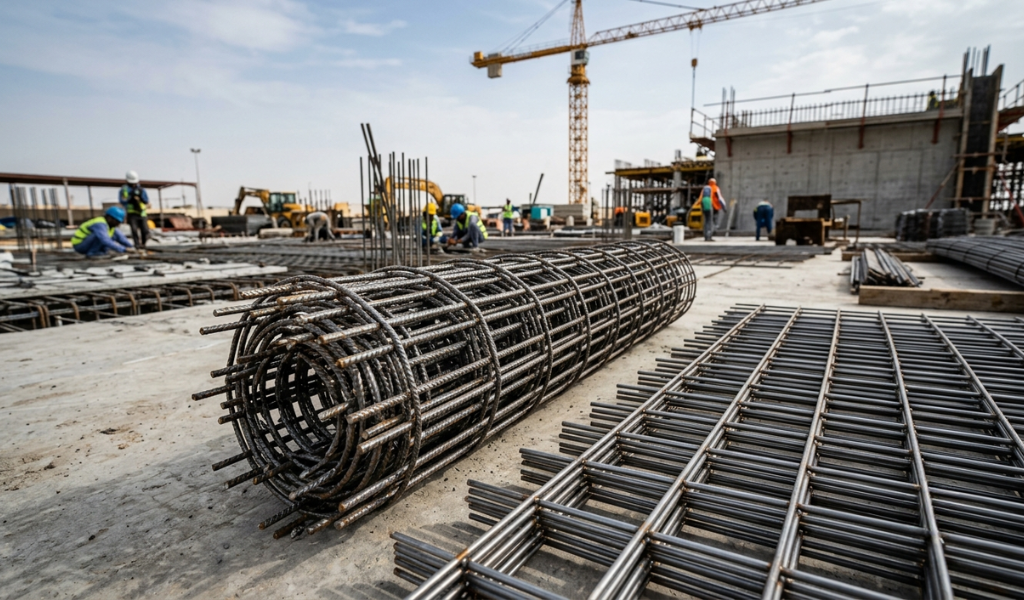
Pile assembly refers to the preparation and assembly of reinforcement components for pile foundations prior to placement for installation. This can be done by cutting, bending, arranging, and tying reinforcing steel to the required shape according to the design.
How Does Pile Assembly Work?
The process generally involves reviewing approved drawings, preparing reinforcement bars, assembling the cage, checking dimensions, and arranging transport to the installation area. Quality checks help confirm that the reinforcement meets the specified requirements.
The exact method of assembling precast concrete piles will depend on the pile system and whether the reinforcement is included during precasting or is prepared separately for the foundation design.
What Is On-Site Reinforcement?
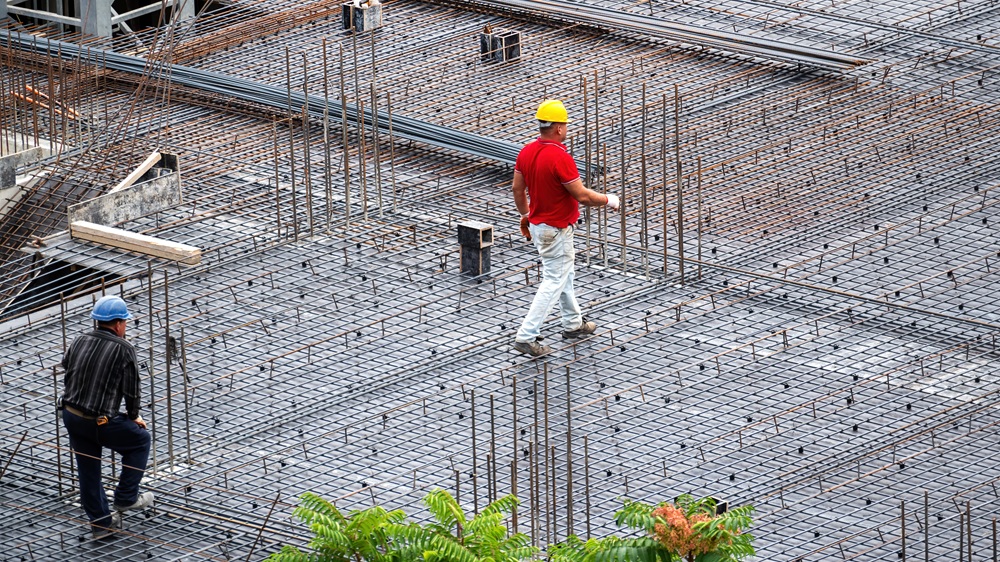
On-site reinforcement involves preparing and assembling reinforcing steel directly at the construction location. Workers cut, bend, position, and tie the bars according to approved structural drawings.
This is useful when foundation designs differ, access to the site is limited, or last-minute adjustments are necessary. However, the process may require more working space, equipment, and labour coordination at the construction site.
Pile Assembly vs On-Site Reinforcement: Key Differences
The primary difference is the location and process of reinforcement preparation. Pile assembly can move appropriate activities to a controlled staging area, while on-site reinforcement keeps the work at the construction location.
1. Construction Speed and Scheduling
Pile assembly can allow reinforcement preparation to take place alongside excavation, piling preparation, or other site activities. This overlap may reduce delays when components are ready at the required time.
On-site reinforcement can take longer when several cages must be assembled in a restricted area or when other trades compete for the same workspace.
2. Quality and Dimensional Accuracy
Preparing reinforcement in a designated area can make it easier to maintain consistent working procedures and inspect dimensions before delivery.
On-site assembly can also achieve the required accuracy, provided workers follow approved drawings and inspection procedures. The result depends on supervision, workmanship and the quality-control system rather than the assembly location alone.
3. Labour and Equipment Requirements
Pile assembly may reduce the amount of reinforcement preparation required at the foundation site. However, it can introduce transport, lifting and handling requirements.
On-site reinforcement reduces the need to transport fully assembled cages over long distances but may require additional site labour, storage space and preparation equipment.
4. Flexibility and Site Conditions
On-site reinforcement can be advantageous for irregular foundations or projects where design changes are likely.
Pre-assembly is often more suitable for repetitive work with standardised dimensions. Any design change must be communicated before fabrication or addressed through an approved modification process.
Practical Comparison Table
|
Factor |
Pile Assembly |
On-Site Reinforcement |
|
Preparation location |
Designated assembly area or facility |
Construction site |
|
Scheduling |
Can overlap with other site activities |
Depends on site access and available labour |
|
Quality control |
Allows checks before delivery |
Requires consistent on-site inspection |
|
Labour management |
Can centralise preparation work |
Requires workers at the installation location |
|
Space requirements |
Needs assembly and storage space away from the foundation area |
Needs sufficient working space on-site |
|
Transport |
May require moving assembled cages |
Often involves transporting individual steel bars |
|
Design flexibility |
Best planned around approved drawings |
Can accommodate certain adjustments more readily |
|
Suitable applications |
Repetitive foundation work and planned production |
Variable layouts and site-specific requirements |
When Should Saudi Projects Choose Pile Assembly?
Pile assembly is worth considering when a project has repeated pile designs, a tight construction schedule, or limited working space around foundation locations.
Consider Prefabricated Pile Reinforcement Cages When:
-
Multiple piles require similar reinforcement configurations.
-
Project schedules benefit from preparing components before installation.
-
Inspection and dimensional consistency are important.
-
Site congestion makes extensive steel preparation difficult.
For pile foundation reinforcement, project teams should confirm cage dimensions, reinforcement spacing, lifting arrangements, and installation requirements before production begins.
When Is On-Site Reinforcement Better?
On-site preparation may be more appropriate when pile designs differ significantly, access for transporting assembled cages is restricted, or the project requires frequent approved modifications.
The decision should also account for transport distances, crane capacity, storage conditions, and the sequence of piling operations.
Choosing Pile Assembly Services in Saudi Arabia
When comparing pile assembly services in Saudi Arabia, contractors should look beyond price alone. Consider the supplier's ability to work from approved drawings, maintain traceable quality checks, and coordinate deliveries with the construction programme.
Check the following before appointing a service provider:
-
Technical capability: Can the provider meet the specified reinforcement dimensions and tolerances?
-
Quality assurance: Are inspection records and material documentation available?
-
Production capacity: Can the required quantities be prepared within the project schedule?
-
Handling and delivery: Can assembled cages be transported and lifted safely?
-
Project coordination: Can fabrication schedules be aligned with site readiness?
Talai Al-Folath For Manufacturing Company supports construction-related steel requirements, and project teams can explore its pile assembly offering to assess suitability for their foundation works.
Conclusion
A reliable foundation construction can be obtained by pile assembly and on-site reinforcement, when chosen according to the requirements of the project. Pile assembly can enhance workflow, preparation consistency, and site efficiency, especially on repetitive piling projects. For added flexibility, on-site reinforcement is available where site conditions or foundation layouts dictate.
The total cost, production schedule, transport arrangements, quality controls, and installation requirements should be compared before deciding. An experienced service provider, considering these factors, can help Saudi construction teams choose a practical reinforcement solution for their projects.
Frequently Asked Questions
1. What is pile assembly in construction?
Pile assembly involves preparing and assembling reinforcement components for pile foundations in accordance with approved structural drawings and project specifications.
2. Is pile assembly better than on-site reinforcement?
Neither method is universally better. Pile assembly may suit repetitive projects with tight schedules, while on-site reinforcement can be more flexible for complex or changing designs.
3. What are the benefits of prefabricated pile reinforcement cages?
They can reduce preparation work at the installation site, support consistent dimensions, and allow inspection before delivery, provided transport and lifting are properly planned.
4. What should I check before choosing pile assembly services in Saudi Arabia?
Review technical capabilities, quality-control procedures, production capacity, delivery arrangements, and compliance with the project's approved engineering requirements.
5. How does pile foundation reinforcement affect project quality?
Correct reinforcement placement, spacing, dimensions, and installation are essential to achieving the pile's specified structural performance. All work should follow approved designs and applicable project standards.