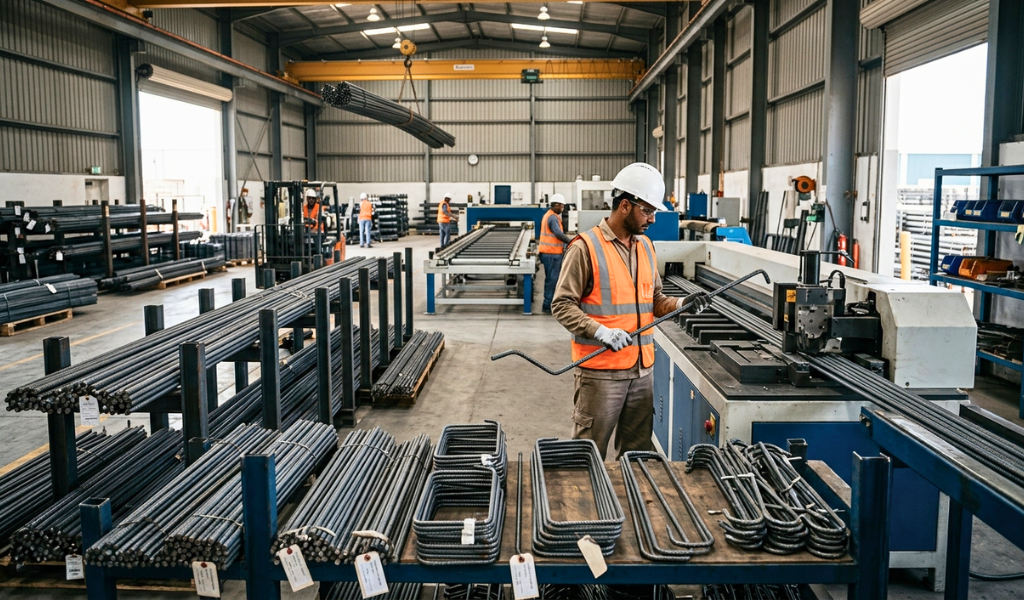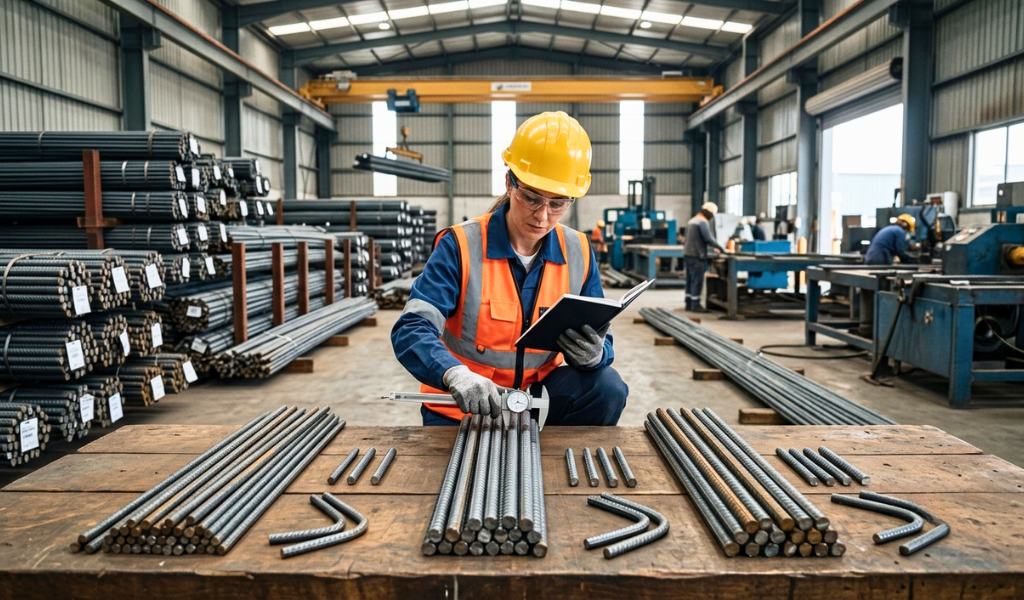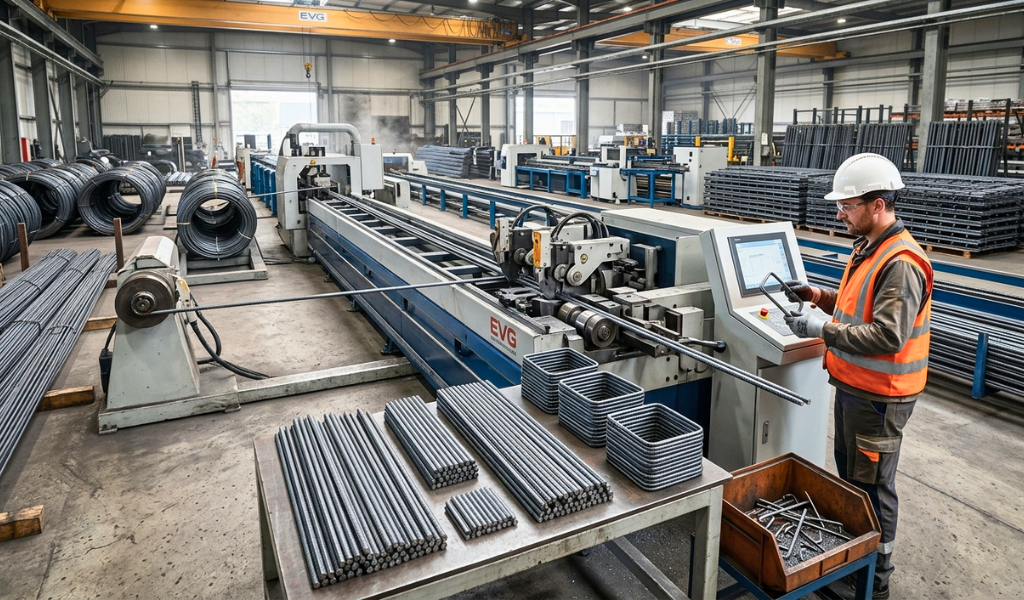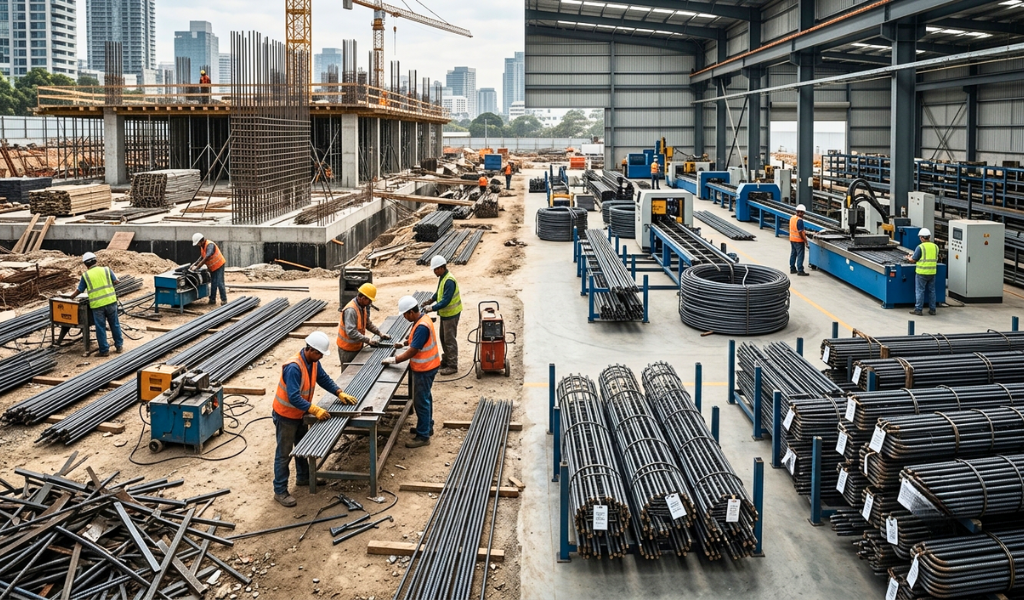
Rebar fabrication is an essential component of modern construction as reinforcement bars need to be cut, bent, and prepared with accuracy before being placed into concrete structures. Contractors typically have a choice between fabricating reinforcement on the construction site or at an off-site facility.
The right approach will depend on project size, program, site conditions, shapes required, and quality expectations. Off-site fabrication can provide more consistency and organization, but on-site work can provide flexibility when project needs change.
Knowing the differences will help the contractors to choose a method that will increase productivity without compromising the quality of reinforcement.
Quick Summary
- Fabrication may occur at the construction project site or at a fabrication facility off-site.
- Dimensional accuracy, workflow, and site safety can be improved with off-site preparation.
- Rebar is cut and bent to the required lengths and shapes, thereby removing the need for extensive site preparation.
- The use of prefabricated rebar can reduce material waste and improve installation efficiency.
- Experienced rebar fabrication services should be selected to ensure consistent quality and reliable delivery on the project.
What are the benefits of rebar fabrication?
Professional rebar fabrication services transform the Reinforcement steel into precisely measured and shaped components that are ready for installation. This allows the contractor to be supplied with reinforcement prepared to project drawings and specifications rather than relying on manual cutting and bending at the project site.
The big plus is that it’s consistent. Controlled processes can be used to make fabricated reinforcement, which helps to keep the dimensions accurate in large quantities.
It can also improve the productivity of the site. As the reinforcement arrives ready to install, workers can spend less time measuring, cutting, and bending individual bars and more time on placement and fixing.
Improved project organisation
Off-site fabrication can also simplify the handling of materials. Bars can be grouped, labelled, and delivered to project specifications to assist teams in better organising installation.
Is fabricated rebar better than cutting and bending rebar on site?
Fabricated rebar will be more efficient than cutting and bending all on-site for many larger or repetitive construction projects. The difference is mainly where the preparation is done.
The advantage of on-site fabrication is flexibility, since the reinforcement can be changed as work progresses. But it requires adequate space, equipment, labour, and quality controls at the construction site.
Steel rebar fabrication can be performed off-site, with reinforcement being precast and delivered. This is helpful in limiting congestion and allowing construction teams to work with materials that have already been formed to the required dimensions.
Neither technique is automatically better for all projects. The choice of the best solution depends on the project's complexity, site access, program, and reinforcement requirements.
How does rebar fabrication reduce construction waste?
Accurate fabrication can reduce waste by cutting reinforcement to predetermined sizes rather than taking measurements and making adjustments on site.
If fabrication is based on detailed bar bending schedules and approved drawings, then material requirements can be planned better. This cuts down on unnecessary offcuts and wrong bends.
Thus, reinforcement steel fabrication can support better material utilisation and reduce the amount of scrap to be stored, reused or removed from site.
What is the difference between rebar fabrication and cut-and-bend rebar?
The terms are very similar, but they can refer to slightly different aspects of the reinforcement preparation process.
Rebar fabrication is the whole operation of preparing reinforcement steel for use in building. It could involve measuring, cutting, bending, tagging, bundling, and preparing bars to project specifications.
Cut and bend rebar is reinforcement bars that have been cut to specified lengths and bent to required shapes and are delivered ready for installation.
Why does this distinction matter?
For projects with detailed rebar designs, the pre-fab rebar can be ready for specific structural elements. This can ease installation and reduce the amount of fabrication equipment required on the construction site.
Practical Information Table
|
Factor |
On-Site Rebar Fabrication |
Off-Site / Prefabricated Rebar |
|
Location |
Construction site |
Dedicated fabrication facility |
|
Flexibility |
High for last-minute changes |
Best when drawings are confirmed |
|
Site space |
Requires a dedicated working area |
Requires less fabrication space |
|
Quality control |
Managed on site |
Controlled in a specialised facility |
|
Waste management |
More potential for offcuts |
Better planning can reduce waste |
|
Labour requirements |
More site labour is needed |
Less fabrication labour on site |
|
Installation speed |
May require preparation first |
Materials can arrive ready to install |
|
Best suited to |
Smaller or changing works |
Large, repetitive, or time-sensitive projects |
How do I choose a reliable rebar fabrication company?
First, verify that the supplier has adequate fabrication capabilities, experienced personnel, and rigorous quality-control procedures.
A good provider should be able to work from approved drawings and reo schedules and keep accurate cutting and bending tolerances. Delivery planning is also very important, as reinforcement needs to get to the site when it is needed.
Ask potential suppliers about:
- Capacity and equipment for fabrication
- Quality control processes
- Traceability of materials
- Tolerances for cutting and bending
- Packaging and labelling
- Delivery capabilities.
Experience in construction projects of a similar nature
For projects that require dependable reinforcement preparation, working with a reputable supplier such as Talai Al-Folath For Manufacturing Company can help contractors plan their reinforcement needs efficiently.
What types of construction projects use fabricated rebar?
Fabricated reinforcement is widely used where concrete structures require reinforced steel in specific lengths, shapes, and configurations.
Typical applications include:
Residential and commercial buildings
Well-fabricated reinforcement for foundations, columns, beams, slabs, and walls can be beneficial for apartment buildings, office buildings, shopping centers, and other structures.
Infrastructure projects
Bridges, roads, tunnels, and other infrastructure developments often need large amounts of reinforcement. Off-site fabrication can help to deal with large volumes in a systematic way.
Industrial construction
Organised fabrication is often used in factories, warehouses and industrial sites where foundations and structural concrete elements need to be reinforced.
Conclusion
The key difference between on-site and off-site rebar fabrication is where the reinforcement is prepared and the level of fabrication that is done prior to delivery. Off-site fabrication can offer better consistency, reduced site congestion, better material planning, and faster installation. Flexibility is offered by on-site work.
If a project has drawings that are confirmed and call for a lot of reinforcement, using pre-made rebar and professional rebar fabrication services can be a practical way to streamline construction. In the end, the right fabrication partner and process can help improve productivity, quality, and waste management.
If you are starting a construction project and require accurately prepared reinforcement, it may be a useful next step to look into professional cut-and-bend solutions.
FAQ's
1. What is rebar fabrication in construction?
Rebar fabrication is the process of measuring, cutting, and bending reinforcement steel into specified shapes and lengths for use in concrete structures.
2. Is off-site rebar fabrication cheaper than on-site fabrication?
It can be more cost-effective for larger projects because it may reduce site labour, material waste, equipment requirements, and preparation time. The overall cost depends on project requirements.
3. What is cut-and-bent rebar used for?
Cut and bend rebar is used for reinforced concrete structures where reinforcement bars need to meet specific lengths, shapes, and bending requirements before installation.
4. Why is prefabricated rebar useful on construction sites?
Prefabricated rebar arrives prepared for installation, which can reduce on-site cutting and bending, improve workflow, and help construction teams work more efficiently.
5. How should I select a rebar fabrication supplier?
Look for a supplier with proven fabrication capabilities, quality-control processes, accurate cutting and bending, material traceability, and dependable delivery support.