Threaded steel is an integral part of modern construction and engineering, providing strength, flexibility, and reliability across many structural applications. From commercial buildings to bridges and even industrial facilities including a variety of infrastructure projects, threaded steel components ensure a long lasting connection.
As the demand for steel construction continues to rise, engineers are relying on more and more threaded solutions. Pros and applications are essential for threaded steel to select them as construction materials.
Quick Summary
- Threaded steel provides strong and adjustable connections in construction projects.
- Commonly used in structural reinforcement, anchoring, and engineering applications.
- Available in different grades, sizes, and tensile strengths.
- High tensile threaded steel offers superior load-bearing capacity.
- Ideal for modern infrastructure and commercial construction projects.
Why Threaded Steel Is Essential in Modern Construction?
Construction-based projects demand materials that can stand up to weight, environmental wear and time. But threaded steel rods is able to provide all these advantages and at the same time gives you extra flexibility when it comes to installation and repair.
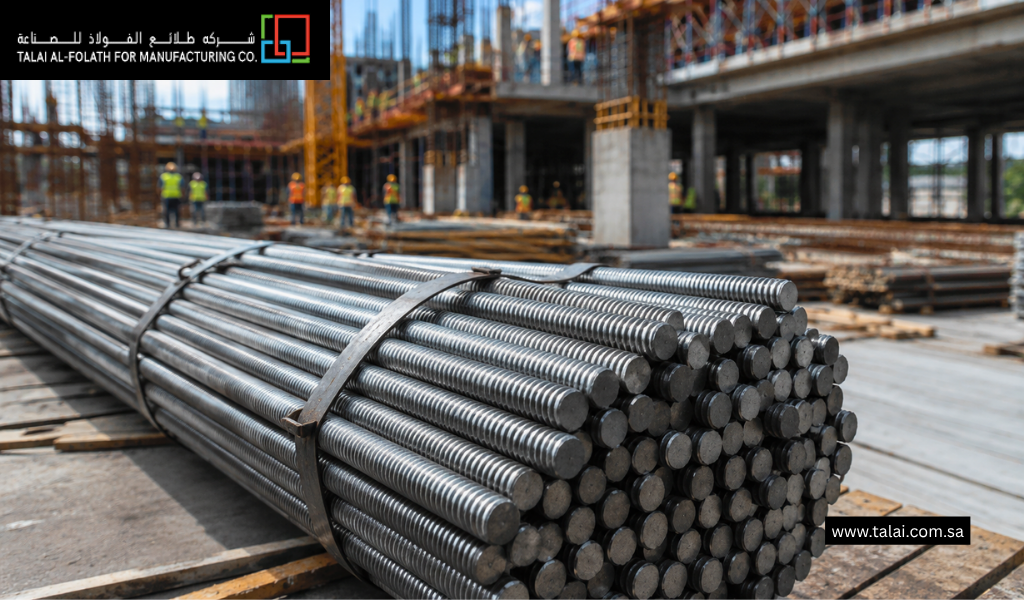
In contrast to regular steel members, threaded steel is threaded along its length so that nuts, couplers and other fittings can be attached to it. This renders it an incredibly adaptable solution to be used in systems for structural support, concrete reinforcement, and anchoring.
This is why you will find that many engineers select threaded steel which meets the design criteria for simplicity and retains a structural performance.
What Are the Different Types of Threaded Steel?
There are various types of threaded steel that can be used according to the needs of the project:
Fully Threaded Rods
These rods are threaded over their full length often used for suspension systems, anchoring and also structural bracing.
Partially Threaded Rods
These rods will have both threads and a smooth surface, combining the looping capabilities of the former with those of the other.
High Tensile Threaded Bars
These bars are designed to withstand very heavy engineering loads and thus, have a greater strength and resistance to deformation under extreme loads.
Stainless and Galvanised Options
Meanwhile, corrosion resistant solutions for threaded steel help prolong service life for projects exposed to moisture or harsh environments.
Common Applications of Threaded Steel Rods
Threaded steel rods are used across numerous sectors due to their strength and adaptability.
Structural Support Systems
Used to anchor beams, columns and other components of a commercial or industrial building.
Concrete Reinforcement
Threaded rods are applied, in conjunction with reinforcement systems to promote overall stability and load distribution.
Bridge and Infrastructure Projects
All large engineering projects are based on threaded steel components for anchoring and structural interconnections.
Mechanical and Industrial Installations
Threaded steel is commonly used for mounting and supporting equipment in manufacturing facilities.
What Is the Difference Between Threaded Steel and Rebar?
This is a question often asked by builders and engineers.
Traditional rebar mainly serves the purpose of enhancing concrete tensile strength. Rebar is used as reinforcement but it usually does not have surface deformations for bonding and may not be meant for adjustable fastening systems.
Threaded steel, on the other hand, is specially created for attachment of nuts, couplers and fastening components by features internal threads. This allows for precise tensioning, anchoring and building connections.
Key differences include:
- Threaded steel offers adjustable connections.
- Rebar mainly reinforces concrete.
- Threaded steel allows easier assembly and disassembly.
- Rebar is generally embedded permanently within concrete structures.
Both materials serve important roles but threaded steel gives more flexibility in engineering and structural applications.Whereas the function of rebar is to provide internal strength to concrete, threaded steel provides secure adjustable connections within structural systems.
Practical Information Table
|
Application |
Recommended Product |
Key Benefit |
|
Structural Frameworks |
Steel threaded bar |
Strong load-bearing support |
|
Concrete Anchoring |
Threaded steel rods |
Reliable fastening solution |
|
Infrastructure Projects |
High tensile threaded bars |
Exceptional strength |
|
Industrial Equipment Support |
Galvanised threaded steel |
Corrosion resistance |
|
Bridge Construction |
Heavy-duty steel threaded bar |
Long-term durability |
What Are the Advantages of High Tensile Threaded Steel?
There has been growing popularity of high tensile threaded steel in demanding engineering environments.
Superior Load Capacity
It is used for critical structural applications as it can sustain much higher loads than standard steel products.
Enhanced Durability
Its strength minimizes the risk of bending, fracturing or breaking under stress.
Improved Safety
They are designed to be extremely stable thus helping projects comply with strict regulations relating to structural stability.
Long-Term Cost Efficiency
You might spend a lot more at first, but with less maintenance to worry about and a longer service life, you can sometimes get better value for money over time.
Versatility Across Projects
High tensile threaded steel is used in everything from commercial buildings and industrial structures to bridges, transportation infrastructure, power plants, wind farms, pole lines and dams; It adapts itself equally well to an infinite variety of engineering needs.
Choosing the Right Building Materials Steel Rods
Here are a few factors that affect the choice of good building materials, steel rods.
- Load requirements
- Environmental conditions
- Corrosion resistance needs
- Project specifications
- Compliance with engineering standards
However, experienced suppliers can help ensure the right grade, diameter and finish is selected for each application.
Why Engineers Prefer Steel Threaded Bar Solutions?
The favourable mix of flexibility, ease of installation and strength is going to be a steel threaded bar. A big reason these are valuable to engineers is that they eliminate the need for assembly, promote ultra-precision, and function over exceptionally long durations.
As the modern construction industry progresses, threaded steel solutions continue to provide a proven answer for safe and effective structures.
Conclusion
Now, the significance of threaded steel in construction and engineering goes without saying. From structural frameworks, to anchoring systems to large scale infrastructure projects, structural steel threaded steel is the solution for modern building needs.
There are several such components ranging from threaded steel rods to steel threaded bar systems and even specialized building materials steel rods that aid in constructing better performing, stronger, and more resilient structures. If you're embarking on a construction or engineering project, you can leverage your choice to select the ideal threaded steel solution for functional properties and long-lasting value by partnering with a trusted supplier.
FAQ's Related to Threaded Steel
1. What is threaded steel used for?
Threaded steel is used for anchoring, structural support, bracing systems, concrete reinforcement applications, and engineering projects requiring strong, adjustable connections.
2. Are threaded steel rods stronger than standard steel rods?
Threaded steel rods are designed for fastening and structural connections, while high tensile versions offer increased strength and load-bearing capacity.
3. What industries commonly use steel threaded bar products?
Construction, civil engineering, infrastructure, manufacturing, energy, and industrial sectors frequently use steel threaded bar solutions.
4. How do I choose the right threaded steel for my project?
Consider load requirements, environmental exposure, corrosion resistance, and engineering specifications before selecting a threaded steel product.
5. What are the benefits of high tensile threaded steel?
High tensile threaded steel offers superior strength, durability, safety, long-term reliability, and reduced maintenance costs.