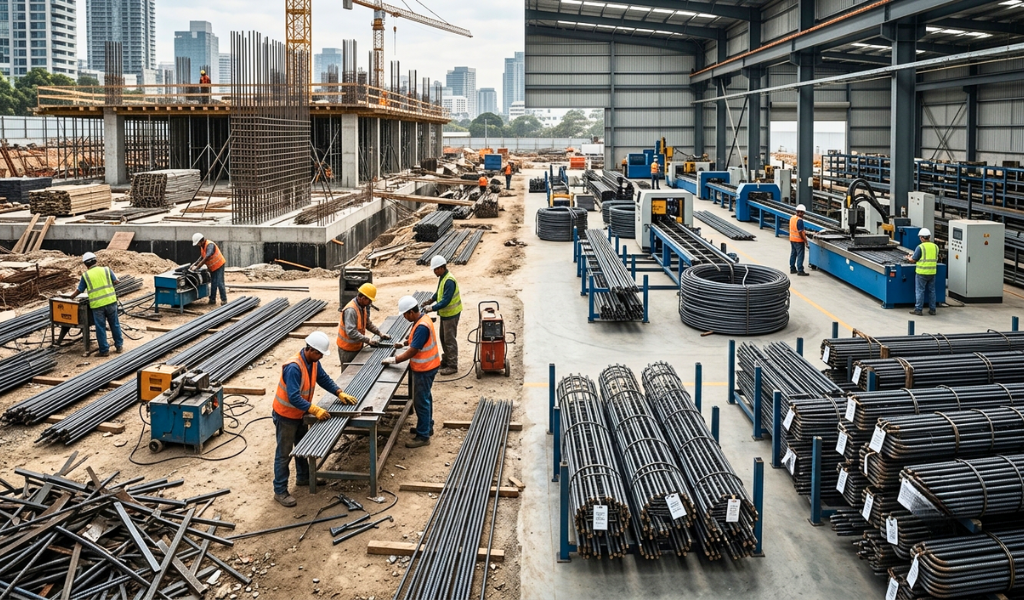
One of the most important decisions in any construction project is to choose which rebar grades. The right reinforcement is vital for strength, longevity and safety whether you are constructing homes or commercial facilities or building infrastructure. Teaching international code comprehension on the part of engineers and contractors also eases choosing appropriate types of steel reinforcement bars while not sacrificing compliance for structural steel with dependable reinforced concrete design.
Quick Summary
- Different grades of rebar affect the strength and performance of reinforced concrete.
- SASO, ASTM and BS have their own recommendations on testing and compliance.
- Choosing the right standard improves structural safety and project quality.
- Understanding the difference between ASTM and BS rebar helps avoid costly specification errors.
- Select reinforcement steel from manufacturers that comply with the project requirements.
Why Rebar Standards Matter in Saudi Construction?
For example, in Saudi Arabia buildings are highly regulated to endure extreme environmental conditions consistent with the country's construction practices. While rebar standards prescribe the mechanical characteristics, chemical composition and quality requirements of reinforcement bars.
Using certified materials enables contractors to adhere to local regulations, achieve better longevity in projects and still be compliant with structural steel. This reduces construction risks and ensures that reinforcement performs as designed throughout the life of the structure.

What is Rebar and Why Grades Are Important?
Rebar means reinforcing steel, and it is the process of embedding rebar within concrete in order to increase tensile strength. Concrete is great under compression but not tension, so reinforcement bars give you the necessary strength for safe structures.
Pattern bars are manufactured using different grades depending on the yield strength, ductility and intended application. Choosing the right grade is crucial for successful reinforced concrete design, particularly in regards to high-rise buildings or bridges and infrastructure projects like industrial facilities.
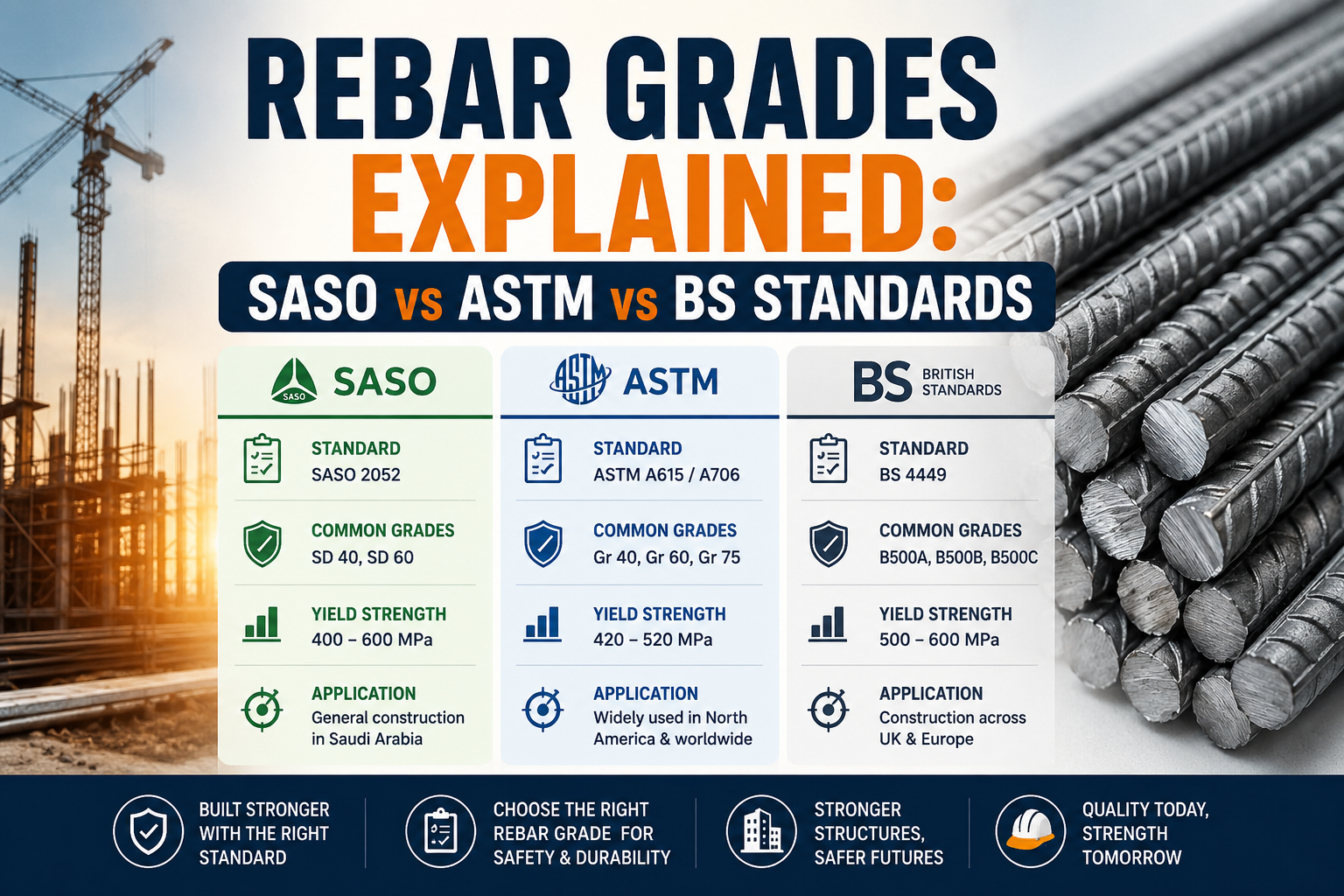
SASO vs ASTM vs BS: Key Differences
Although all three standards focus on quality reinforcement steel, they differ in specifications and testing methods.
Standard
|
Standard |
Primary Focus |
Common Applications |
Key Benefit |
|
SASO |
Saudi quality and regulatory compliance |
Construction projects in Saudi Arabia |
Meets local regulations |
|
ASTM |
Mechanical performance and material testing |
International commercial and industrial projects |
Widely recognized globally |
|
BS |
British engineering specifications |
Engineering and infrastructure projects |
Consistent design standards |
One of the biggest questions engineers ask is what are differences between ASTM vs BS rebar?
ASTM standards typically focus more on material testing and performance properties; while BS provides appropriate engineering specifications as well as dimensional requirements. Saudi Standards, Metrology and Quality Organization (SASO) is responsible for aligning products according to Saudi regulations; making it a critical component in any project based out of the kingdom.
Read More: Steel Reinforcement Bars: Types, Benefits, and Applications in Modern Construction
How to Choose the Right Rebar Standard?
Which one will be right for you is based on where the project is located, engineering requirements and client preferences.
Consider these factors:
- Local building regulations
- Required load-bearing capacity
- Environmental exposure
- Project design specifications
- Compliance with engineering standards
Experience with traditional aircraft manufacturers is critical experience that makes sure the reinforcement actually delivered satisfies both technical needs and local regulations. Talai Al-Folath For Manufacturing Company contributes to high-performing projects with robust reinforcement solutions that meet industry requirements.
Conclusion
Grasping rebar types and grades sets engineers, constructors, project owners to make rational picks, this is the point. With the right reinforcement, every project becomes a safe build that is durable and fully compliant with structural steel. However, by choosing appropriate materials and knowing about the ASTM vs BS rebar difference you can enhance the strength of your structure which will help ensure first-class reinforced concrete design.
FAQ's Related to difference between SASO, ASTM, and BS rebar standards
1. What is the difference between SASO, ASTM, and BS rebar standards?
SASO follows Saudi regulations, ASTM focuses on internationally recognized material specifications, and BS emphasizes British engineering practices and performance standards.
2. Why are rebar grades important in construction?
Rebar grades determine the strength, ductility, and durability of reinforcement, helping structures safely resist loads and environmental conditions.
3. Which steel reinforcement bars types are commonly used?
The most common types include mild steel bars, deformed bars, epoxy-coated rebar, galvanized rebar, and stainless steel reinforcement.
4. How does structural steel compliance improve construction quality?
Structural steel compliance ensures reinforcement meets required safety, testing, and quality standards, reducing structural risks and improving building performance.
5. How do I choose the right rebar standard for my project?
Review local regulations, engineering specifications, environmental conditions, and project requirements. For Saudi projects, SASO-compliant reinforcement is typically the preferred choice.