Selecting the best reinforcement material can make a difference in building efficiency, labour expense and structural performance. Coil vs Straight Rebar rebar in coil. Rebar is one of the fundamental materials on a construction project so, naturally, this question comes up for most contractors and engineers.
Both products play an important role in structural concrete, serving different needs. Being aware of the strengths and limitations of each can also aid in determining which solution is right for which specific construction project. We will compare both options and provide what each performs best in modern construction.
Quick Summary
- Rebar in coil offers greater flexibility and easier transportation.
- Straight rebar is ideal for projects requiring pre-cut lengths.
- Reinforcement steel coils can reduce material waste and handling time.
- Both products are widely used as construction reinforcement materials.
- The best choice depends on project scale, design requirements, and site conditions.
What Is Rebar in Coil and How Does It Work?
Rebar in coil is a continuous length of reinforcing steel wound into coils for easier storage, transportation, and processing. Unlike traditional straight bars, it can be uncoiled and cut to specific lengths as needed.
This format lets contractors tailor reinforcement needs on the jobsite or at fabrication yards. Due to the various purposes of rebar, rebar in coils is often used on projects requiring different lengths and shapes.
To increase handling efficiency and overcome logistic hurdles associated with transporting long steel bars, many manufacturers opted to produce reinforcement steel coils.
Straight Rebar: An Overview
Straight rebar is made of steel that comes in standard lengths. It is the conventional version of reinforcement, implemented in buildings, roads and bridges.
These bars are typically cut, bent, and installed according to engineering specifications. Straight rebar remains popular because it is readily available and suitable for standard reinforcement applications.
Straight bars are also a good option for projects that have simple designs and predictable reinforcement requirements.
Rebar in Coil vs Straight Rebar: Key Differences
Flexibility
Coiled rebar provides enhanced versatility because it can be cut to tailor-made lengths. This is particularly useful for projects where you change the amount of reinforcement as required.
Straight rebar is less flexible but does a good job when standard lengths are adequate.
Transportation and Storage
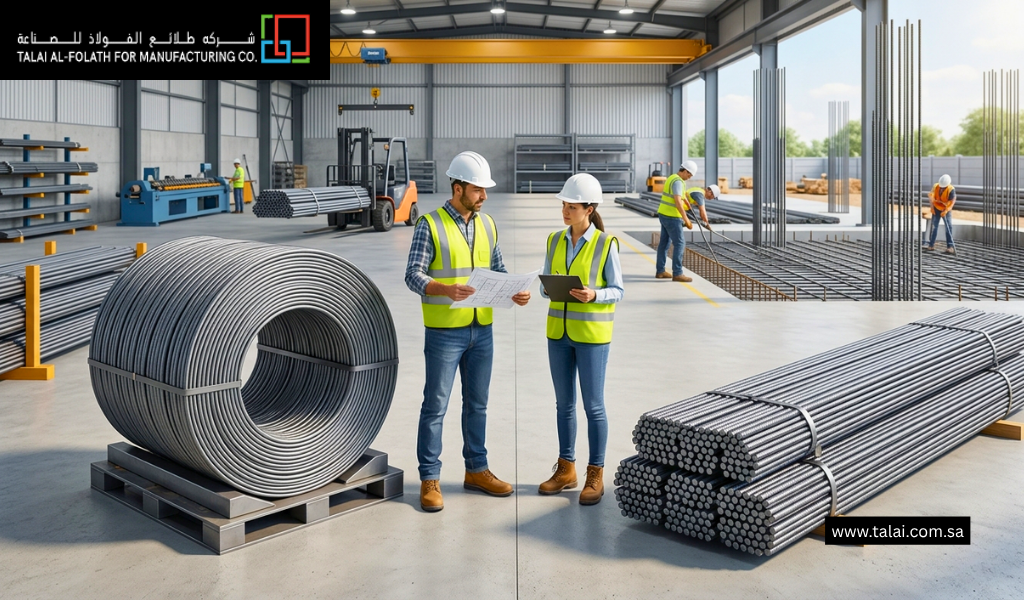
However, the primary benefit of rebar in coils is storage flexibility. Coiled steel takes up less room when transporting and storing than long straight bars.
Moving raw material in the form of straight rebar often needs bigger storage spaces and special transport arrangements.
Material Waste
There is usually less waste as a result of this because rebar in coils can be manufactured into correct lengths.
The use of straight rebar can create additional offcuts, especially on the more intricate reinforcement layouts.
Labour Efficiency
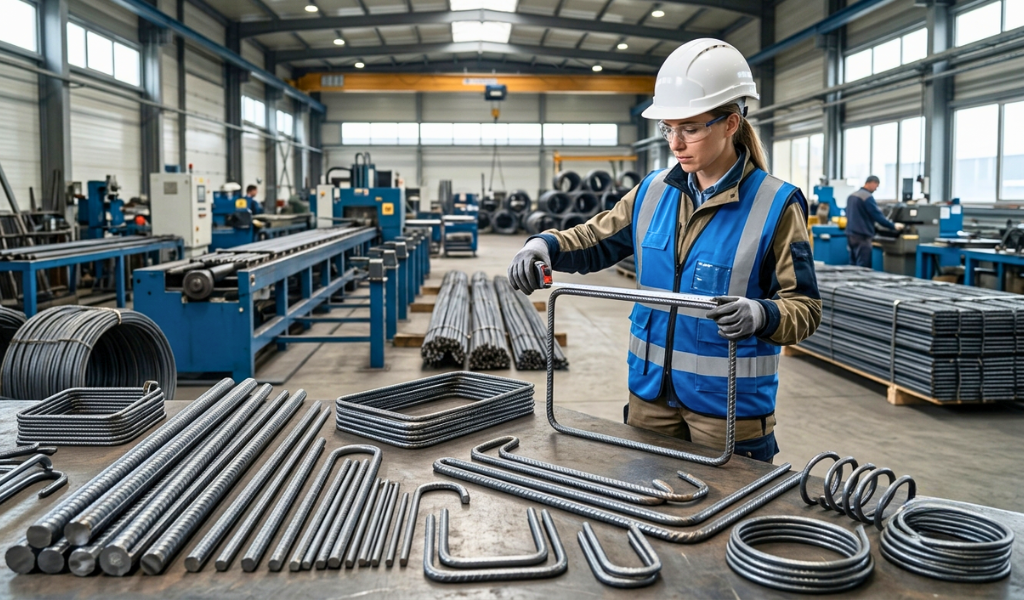
Using coiled rebar speeds fabrication when used with robotic cutting and bending equipment.
More handling and processing of straight bars means higher labour requirements.
Practical Comparison Table
|
Factor |
Rebar in Coil |
Straight Rebar |
|
Flexibility |
High |
Moderate |
|
Transportation |
Easier and more compact |
Requires more space |
|
Storage Efficiency |
Excellent |
Average |
|
Material Waste |
Lower |
Higher |
|
Custom Length Production |
Easy |
Limited |
|
Standard Construction Projects |
Suitable |
Highly suitable |
|
Automated Processing |
Excellent |
Good |
|
Initial Handling Requirements |
Lower |
Higher |
How Does Rebar in Coil Improve Construction Efficiency?
In the day and age of construction projects, one thing that remains atop this newly post-covid world is a huge focus on productivity and cost control. This is how rebar in coil presents a huge advantage.
As the material can be processed in a continuous manner, reinforcement elements can be manufactured at a faster pace by contractors. The steel, which is straightened and cut followed by automatic bending with very little manual intervention.
Benefits include:
Faster Fabrication
The hops are continuously fed in more quickly, which minimizes the number of pauses and increases throughput on how fast reinforcement is produced.
Reduced Site Congestion
Compact coils require less storage space, helping keep construction sites organised.
Improved Material Utilisation
By determining lengths of cut and reducing scrap while also optimizing the consumption of steel.
Better Workflow Integration
So, many upcoming factories with a purpose to fabricate reinforcement steel coils have been designed for this operational efficiency.
Which Option Is Best for Different Projects?
Residential Construction
Straight rebar is often sufficient for smaller residential projects where reinforcement requirements are relatively simple.
Commercial Buildings
In addition, coiled rebar can contribute to improving fabrication efficiency and reducing waste for large-scale developments.
Infrastructure Projects
Advanced Industrial steel reinforcement solutions, such as the coiled reinforcement system, are often used in bridges and tunnels and other transport projects.
Manufacturing and Prefabrication
For this reason coiled rebar is typically preferred for production of precast concrete components due to the automated equipment used in such facilities.
Factors to Consider Before Choosing
There are few points while choosing rebar in coil or straight rebar:
- Project size and complexity
- Storage and transport requirements
- Available fabrication equipment
- Labour costs
- Material waste reduction goals
- Overall construction schedule
However, the right decision must meet requirements for successful engineering and operational efficiency.
Conclusion
In fact, both straight rebar and rebar in coil are used widely in contemporary construction. Straight bars are still a reliable solution for most regular applications if required, whilst coiled reinforcement introduces flexibility, better logistics and increased productivity.
Due to the construction companies looking for the need of efficient reinforcement materials, rebar in coil is becoming more and more popular in large scale or efficiency-driven projects. Consulting with a supplier you trust who can help recommend the correct product for your next industrial project, will allow you to maximize performance while minimizing waste and improving fabrication efficiency.
FAQ's Related Rebar in Coil
1. What is rebar in coil used for?
Rebar in coil is commonly used in commercial construction, precast concrete manufacturing, and infrastructure projects that require customised reinforcement lengths.
2. Is rebar in coil better than straight rebar?
It depends on the project. Rebar in coil offers greater flexibility and efficiency, while straight rebar works well for standard construction applications.
3. Do reinforcement steel coils reduce material waste?
Yes. Because coils can be cut to precise lengths, they often generate less waste than fixed-length bars.
4. Are reinforcement steel coils easier to transport?
Generally, yes. Their compact form makes storage and transportation more efficient compared to long straight bars.
5. Why is industrial steel reinforcement important?
Industrial steel reinforcement improves the strength, durability, and load-bearing capacity of concrete structures, making it essential for modern construction projects.